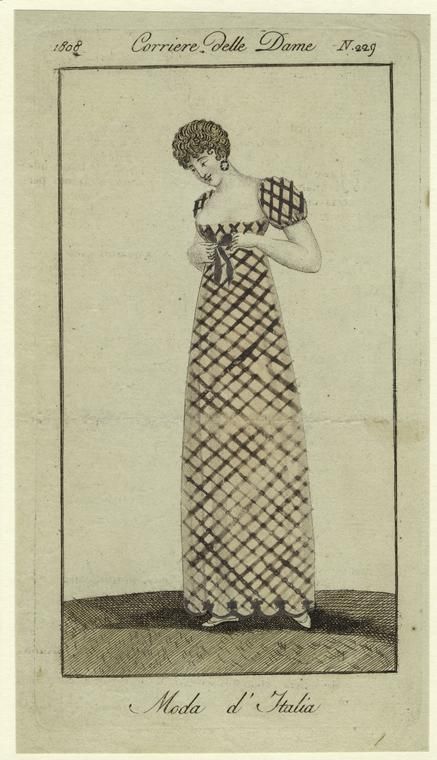
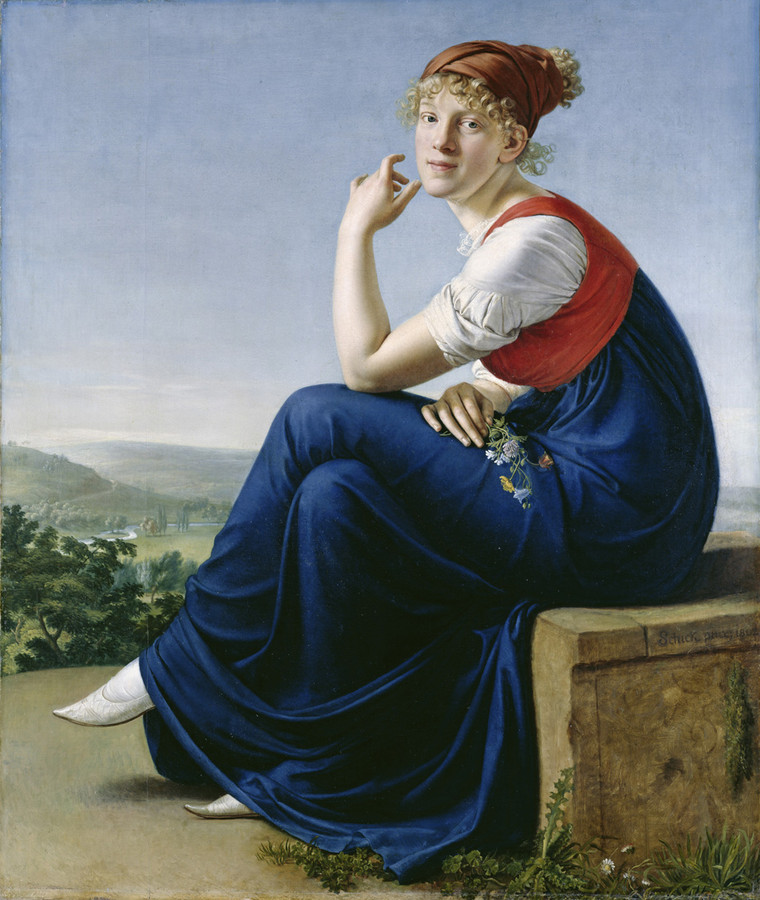
H.Dannecker, G. Schick, 1802, Staatliche museum, Berlin, Germany
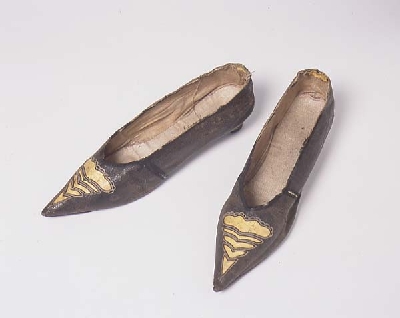
leather and gold decoration, shoes, 1790s
How do we choose our shoes? what makes us long for a pair of very pointed flats rather than round toed ballerinas?…
Fashionarchaeology has been musing over this question very much lately. Pointy flats are, after all, THE party shoe this 2013-14 festive season…
Looking back in history, points have come and gone several times over the centuries. Waves of “fads” or “fashions” which lasted centuries or just decades. Today they last barely one season and are always offered alongside a distinct alternative. Freedom of choice? maybe. So how do we decide which shape of shoe to go for? It would be great to say we follow our instinct, but of course our choice is always culturally determined. We can hardly desire what we do not know or can not yet imagine.
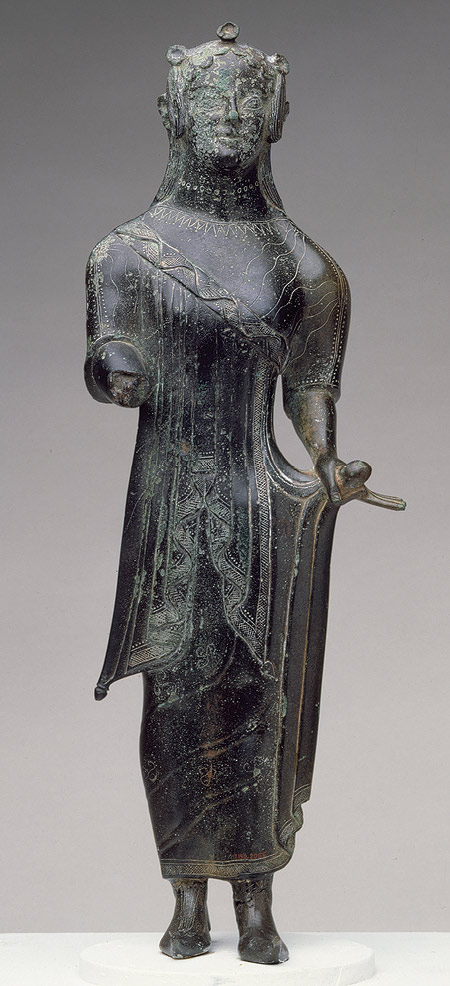
Etruscan, metal statuette, kore, last quarter 6th Century B.C., Metropolitan Museum of Art, New York USA
The Etruscans where master cobblers. Unlike Greek (and later, Roman women) Etruscan women were always represented wearing ankle-high, smooth and strong-looking, pointy booties. We have however very little information regarding this particular “local” fashion – or how and who produced it.
The “orient” (anywhere east of Athens) seems to be the common denominator for pointed footwear of the past. Pointy flat shoes were fashionable for women throughout the long Byzantine Empire
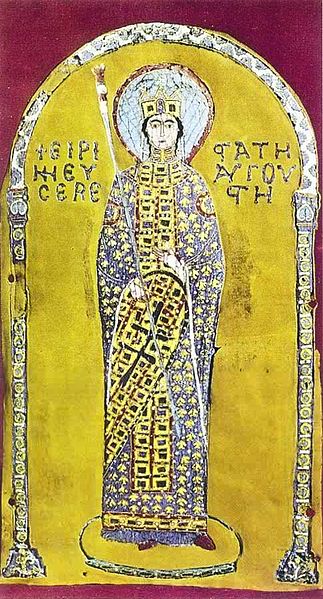
Enameled metal plaque, Empress Irene (detail from the Pala d’Oro), 10th Century, Basilica di San Marco, Venice, Italy
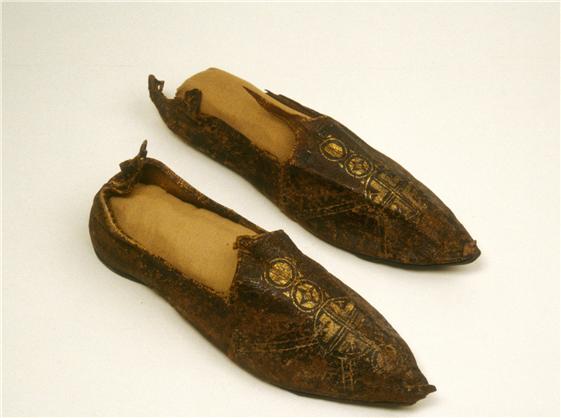
Gold stamped, leather shoes, Byzantine, 6th – 9th Centuries , Walters museum, Baltimore, USA
The higher the status the greater the decoration, empresses such as Irene, wore red pointed slippers encrusted with gems and pearl embroidery.
In Christian iconography females are always depicted with footwear, never barefoot. Their feet were covered by pointed shoes and hidden by long floor-length garments (just as their hair was safely tucked away under veils). Women’s feet thus become taboo…
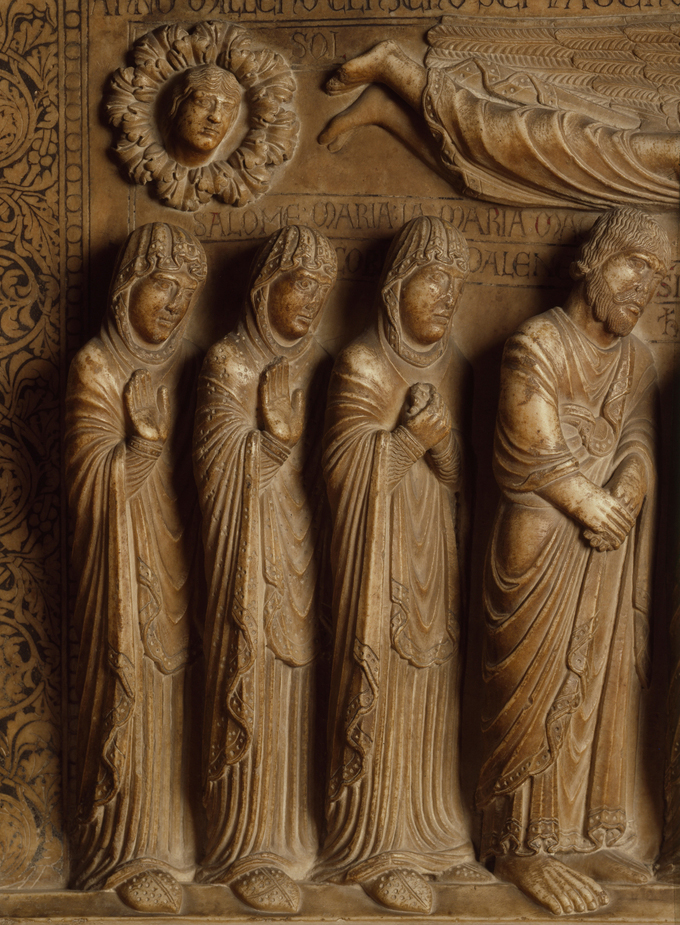
Benedetto Antelami, Deposition from the cross (detail: women), 1178, Parma cathedral, Italy
The real “pointy shoe fashion moment” in history however, comes with the French Revolution. By 1795-6 French women were reinventing their fashion identity in the aftermath of the worst years of the Revolution – when dress had become a matter of life and death
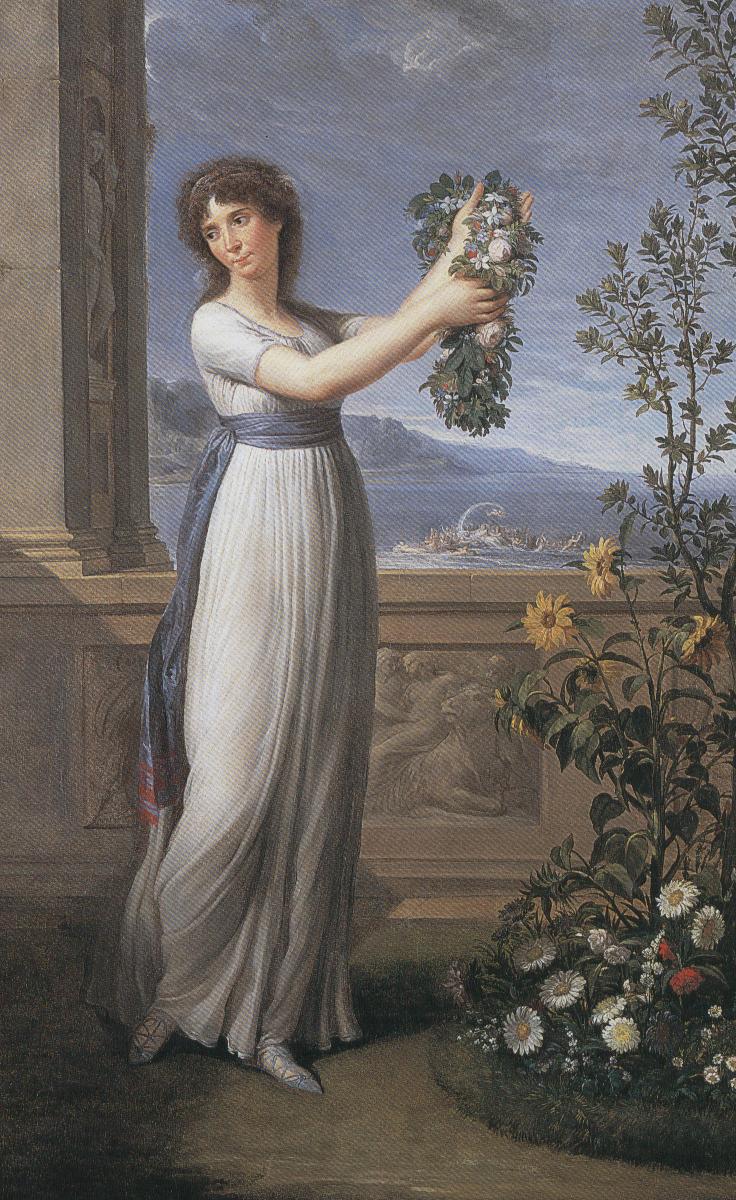
Andrea Appiani, Rose Beauharnais (Mme Josephine Rose Bonaparte from 1797), 1796, p.c.
During the years of the Directoire women like Rose Beauharnais (Napoleon gave her the name Josephine as he found Rose too vulgar) were turning to the art of classical antiquity for fashion inspiration. In the early years of neoclassical dressing, sandals were the most obvious choice – but also a semi closed shoe like the light blue one she is wearing in the portrait.
I have never seen examples of surviving sandals from this period, but I have seen many utterly wonderful examples of very pointed “flats” (heels were totally out of fashion)
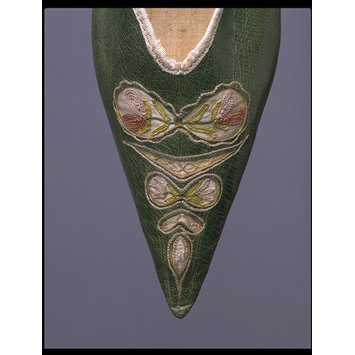
Green leather shoe, cut out detail filled with silk embroidered linen, late 1790s, V & A, Lon, Uk
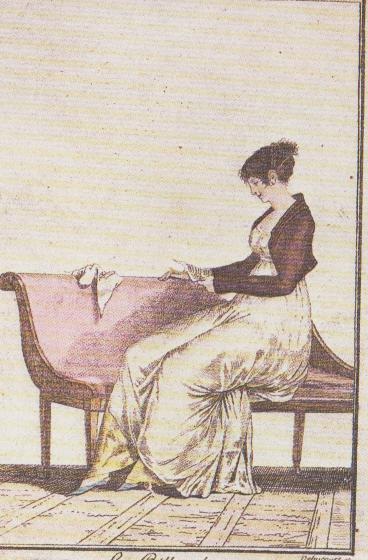
French fashion plate, 1801
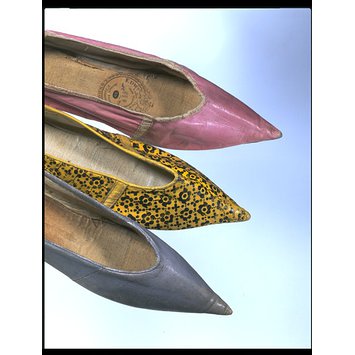
Three shoes, 1790s-1800, V & A, London, UK
Leather or silk or the very “modern” printed leather variety of pointed flats (see above) in bright pastel tones such as lilac, heather pink, sun yellow, grass green, were chosen to set off the bright white of the neoclassical dress to its best effect.
Fast-forward to today:
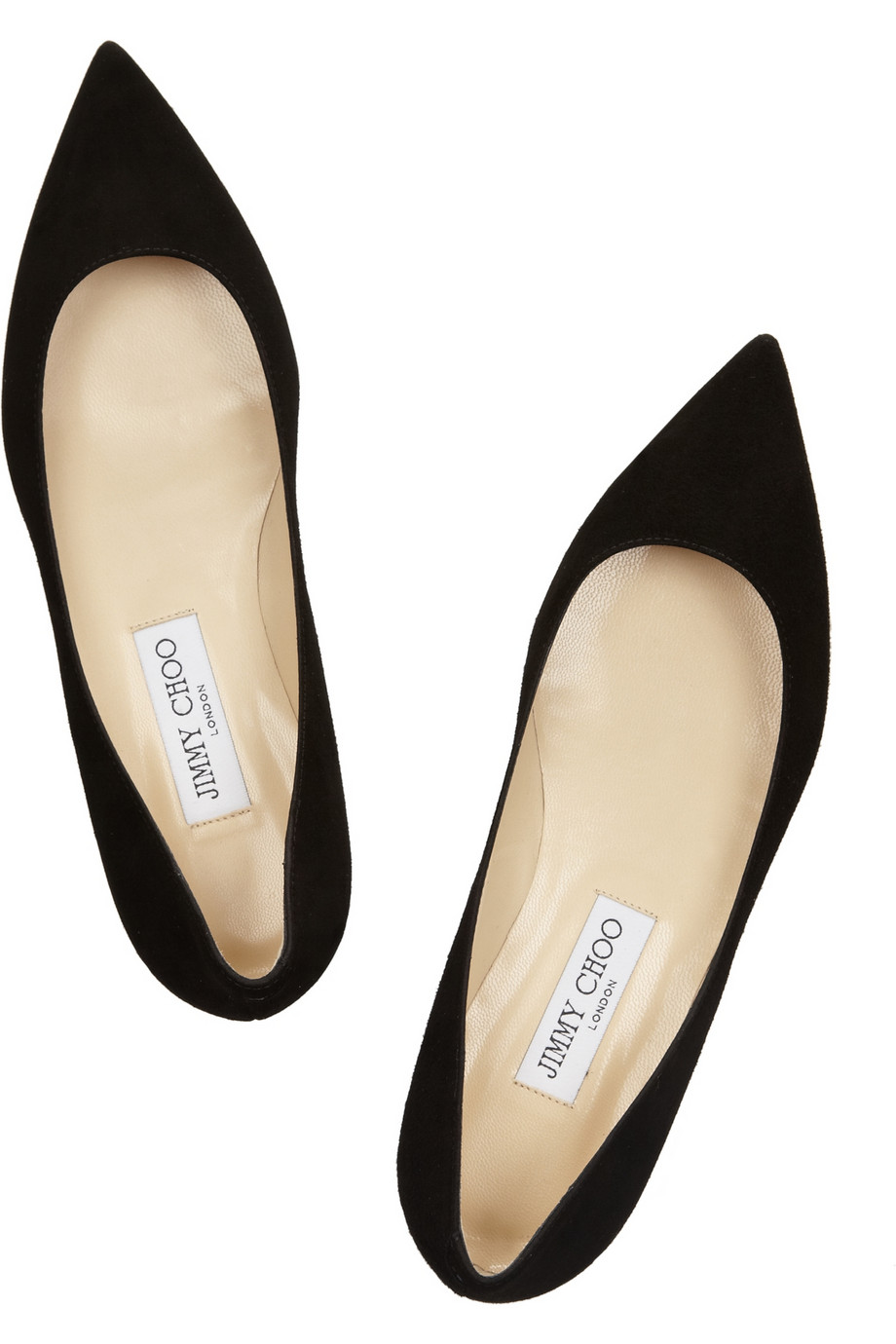
Black suede Jimmy Choos……
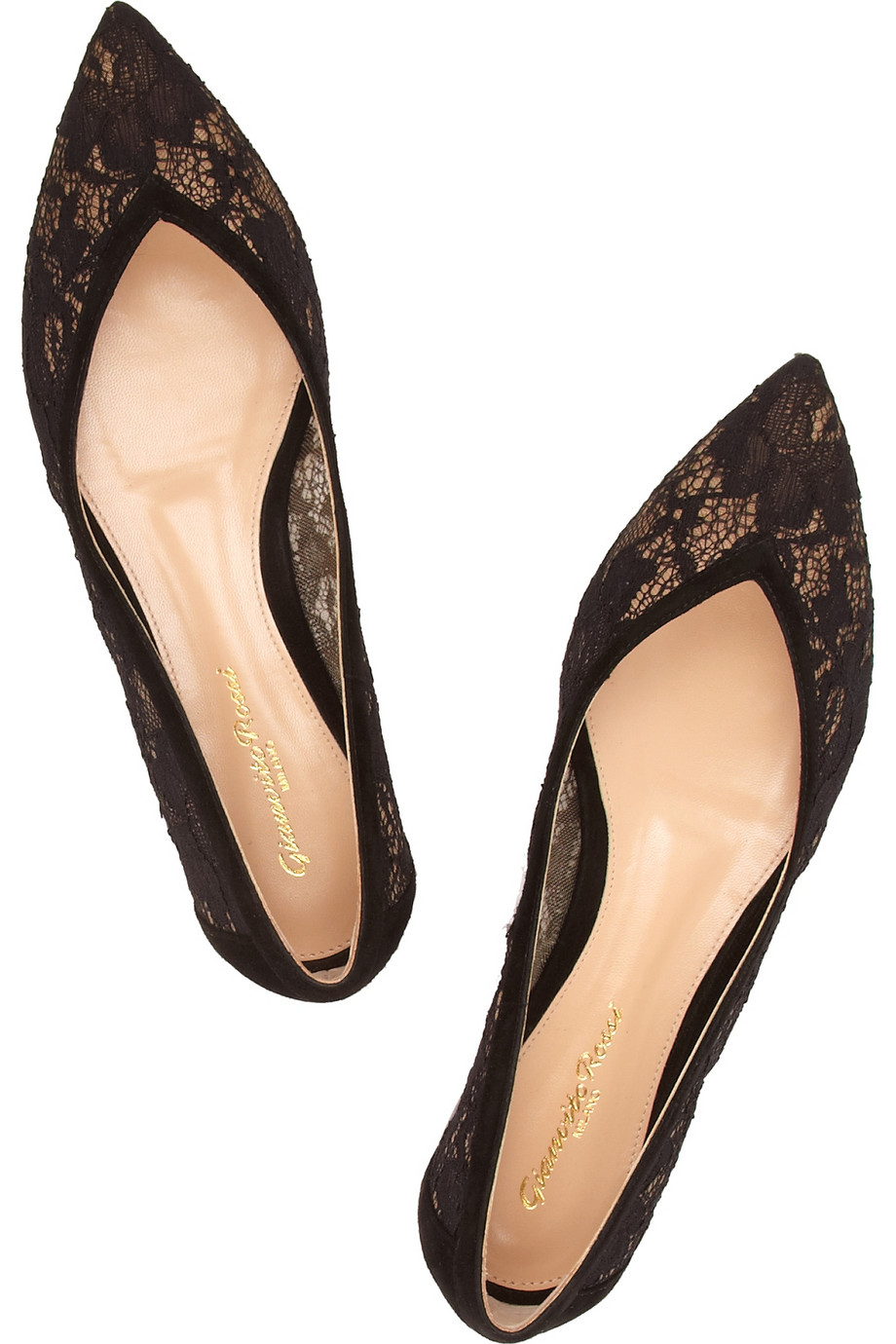
G.Rossi black lace version…..
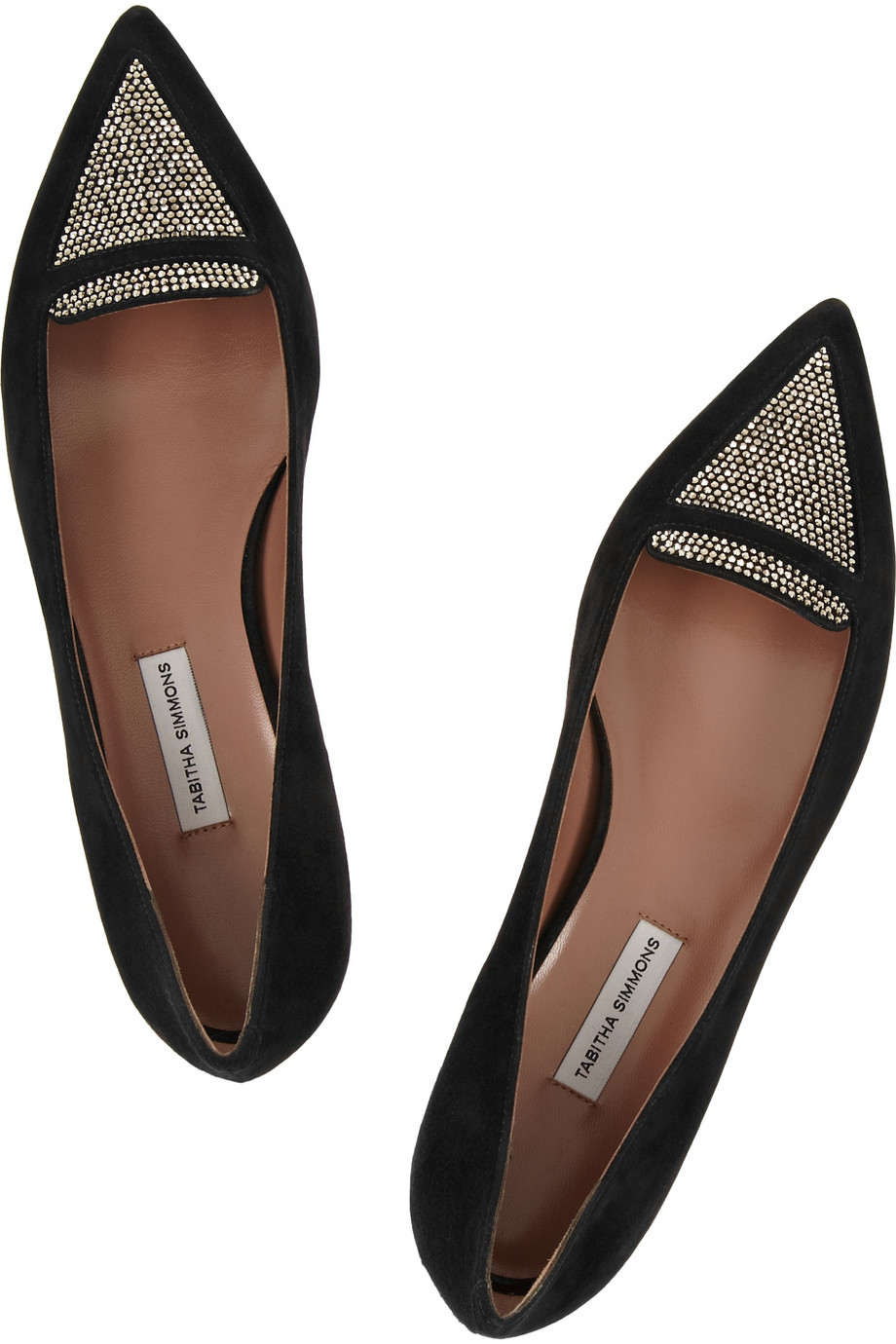
And Tabitha Simmons’s black with glittering embellishment…..
ENJOY and dance your way into a fabulous 2014!
 VIRGINIA HILL
This proves that what is old maybe one day the new trend, so I will now keep my thin ties.
LikeLike
Are you kidding? They are back on style already! Break them out!!! 😀
LikeLike
Very interesting blog! The pics are great. So this is how women’s bunions came about! LOL
LikeLike
lol!!
LikeLike
I love arts shoes, and actually have a set of set of “shoe” cards that I use in a “design a shoe” lesson plan for my students. I will add your blog to this lesson plan!
LikeLike
Seriously, I have never ever seen anybody doing so much research on shoes.
So much effort..loved the post.
Congratulations on being Freshly Pressed!
LikeLike
Reblogged this on Tanti Senjaya and commented:
I never like point shoes, but maybe this will change my mind.. Anyway, a very good article for those who concern about what’s in in 2013 🙂
LikeLike
Thanks for the footwear history, I enjoyed reading it.
LikeLike
Beautifully written!
LikeLike
Amazing post! 🙂 Happy New Year!
LikeLike
So interesting! I love your research and photos!
LikeLike
Very Interesting, but you didn’t dig deep enough.. Please dig farther back into time on all your fashion histories!
LikeLike
Thank you! …but if I dig any deeper I will be out of a job soon (see lecturing and writing – the paid variety – you will just have to wait for the book to come out dear
LikeLike
I’ve seen the pointy toe flat/heel come in and out of fashion several times during my lifetime so far..And at 50 years of age? Not sure how other women feel about them; BUT they’re the most uncomfortable shoes..I’ve an admitted shoe fetish(not a freaky fetish , I just love shoes and lots of them lol!) but I own no pointy toed ones. Nor will I ever..Nice to see how far back into history the style goes though. Well done !
LikeLike
totally agree!!
LikeLike
Pointy shoes are common in Indian jutis (embellished sandals). Find them rather stylish! Very good post.
LikeLike
If you haven’t been, drop by the Bata Shoe Museum in Toronto. 🙂 Just incredible shoe history on display. They always have special exhibits.
LikeLike
Reblogged this on American Libertine Style and commented:
Always fascinated by the history of fashion,,,take a look at these interesting post.
LikeLike
I’m a fan of Watteau’s pointy shoes.
LikeLike
Really interesting post – I have often wondered about the history of flats and so this was nice to read.
LikeLike
Wow! thank you for such an interesting piece!
LikeLike
very nice
LikeLike
A fascinating history-and I’m a guy who doesn’t think much about shoes. You do a skillful job of integrating the shoes with other historical trends (the French revolution, etc.). I was thinking that maybe pointy shoes were originally among the indicators that aristocrats and women wore to signal that they did not perform physical work. Do we know if farm and peasant women wore rounded-toe shoes in any of these societies?
LikeLike
Reblogged this on History Kicks Ass! and commented:
A very neat look at the history of shoes!
LikeLike
First time “shoes” is written in the Bible, is when Moses have to take his shoes off. Because he was standing at holy ground: http://wp.me/p3tGFm-17
😉
LikeLike
Gosh. That’s fabulous! I had no idea that pointy flats had been such a fashion staple across the centuries and also so geographically widespread.
LikeLike
I never wear pointy shoes- they squish the toes into unnatural shapes. I do like the look of them on other people thoug” I wonder if ancient pointy shoes wee only worn by the wealthy who never walked.
LikeLike
I never stopped having pointy toe shoes. I’m back in fashion!
LikeLike
Wonderful blog and post!!!!
LikeLike
Reblogged this on theShop @Bath&Beauty.Co and commented:
This was a nice read about #shoes #vintage #follow
LikeLike
pointy shoes will never get out of fashion! A very interesting post
http://livinglikefashion.wordpress.com
LikeLike
I had no idea that my love of pointy shoes has so much historical precedent!
LikeLike
I never thought of shoes in this dimension before! Thanks for sharing.
LikeLike
I remember back in the early 1960’s seeing women with horribly distorted feet, reminiscent of the footbound Chinese woman pictured in an earlier post. I assume this came from pointy pumps, not flats, though flats might do it in a lesser degree.
Pointy toes make sense for one purpose only: getting into a stirrup easily. It might have carried some connotation of nobility long ago, and spread from that. Just guessing.
LikeLike
Nice ^^ I love pointy shoes 🙂
LikeLike
Being someone w/a shoe fetish (leaning towards towering heels, not flats) this was extremely informative and interesting. Thank you.
LikeLike
Hello.
Nice post, I like your blog.
If you are interested in world, classic or indie cinema please look at my blog. Thank you. http://www.aworldoffilm.com/
LikeLike
Interesting post! Would you mind if I re-blog it?
LikeLike
Such great examples from history … but not a flip-flop in the bunch?
LikeLike
Lovely post – thank you !!
Like Lorraine I wished it was longer, but I know what you mean about trying to blog and hold down a full-time job at the same time – I’ve been keeping my own personal journal since 2005 and a fashion blog since 2006, and work full-time as a Visual Merchandiser, and as a result, never seem to have enough time to update either as frequently as i would like !
I have just transferred my fashion blog to WordPress as Live Journal appears to be turning more and more Russian by the day and everyone’s leaving !! Do come on over and visit…
LikeLike
I never really thought much on the history of shoes but this article was very interesting. I must admit that I have a weakness for shoes and especially pointy heels although I’ve found some really nice pointy flats as well.
LikeLike
Oh my goodness — I want the green velvet shoes from the V & A! My daughter is eleven, and part of the cult of Ugg boot wearers. She is fearful of wearing anything “pointy” as it is so out of fashion in her wee universe. Advice?! Thanks for the beautiful images & happy 2014.
LikeLike
Love the pointed shoe history. Having danced myself i can relate to the high instep and problem toes that pointed shoes eventually create.
LikeLike
Very cool!
LikeLike
Wow, great post! Very informative – I love it. Very well written and interesting!
LikeLike
Reblogged this on Wicked Bitch, by Biker Author Amy Irene White.
LikeLike
Men in 16th century wore pointy shoes as a symbol of phallic power. The longer the better. :p
Interesting post. Personally I find pointy shoes a bit much but they would really be handy in kicking some annoying people. :p
LikeLike
Reblogged this on HISTORY IN THE MAKING and commented:
We are liking this article about the history of pointy shoes – especially the images.
LikeLike
Such a awesome post ! thanks for sharing with us ….luvd the antique shoes
LikeLike
I’m a new blogger and was fascinated how a blog could centre around “pointy shoes”….it was really interesting. How about wedged shoes – does it have a long history too? and how about the stilettos – currently taken to ridiculous heights. I am amazed to see young girls walking as if on stilts and wonder how they can be seduced by designs by males who continue to walk around in nice comfy shoes. I wonder what sorts of foot problems they will land up with. Thanks for a nice insight.
LikeLike
Very informative blog entry. I love shoes as well as history so I really enjoyed reading this. And I was impressed with the graphics especially the ones that showed the detail and craftmanship of the shoes. I love the look of a pointed toe shoe, but not flats. A well made flat should start the angle to the point after the toes which make them longer and makes them a tad awkward to walk in. Thanks so much for this.. I must reblog. Happy New Year!
LikeLike
Love this post. When I was living in Australia, the pointy flat came back in 2006 and then it was popular in the U.S. in 2012. It’s so interesting that nothings really new. Just reinvented. http://www.laughingsamurai.com
LikeLike
love those G. Rossi shoes!
LikeLike
This is not an interest of mine..or so I thought until I read this. It’s actually really interesting!
LikeLike